Showing posts with label exotic seasonings. Show all posts

20 October 2009

Loving Leftovers

Forget what Mother said about finishing everything on your plate! Although you’re a grown-up now you still feel mother hovering over your plate uttering this over and over in your head. Bless your precious mom and even with all her good intentions, what she gave you was a serious guilt trip, and perhaps today you find yourself forcing to consume the excess food on your plate.

In a restaurant we feel no guilt about just getting a doggy bag, so use the same attitude with your home cooking. Leftovers are not just for the monstrous Thanksgiving turkey everyone wants to use up before it spoils. They eliminate the need to cook a meal from scratch or search for food the next day. I promise you that your mom isn’t looking!

It's fun to also cook meals which naturally serve double duty as leftovers the next day. These include foods like eggplant, cold pasta which can be incorporated into a salad, chicken, and beans. Leftover meats can be easily incorporated into a wonderful and enticing new recipe to create an entirely new meal. It only takes some fresh herbs and/or vegetables, various spices, and some other common items in the kitchen to jazz up and help reinvent a leftover meal.

Here's a very useful information page for utilizing a very common leftover meal item Chicken, at Love Food Hate Waste. Make sure to click on "Show imperial Units" under "Ingredients" for the recipe measurement, since this is a British website with a preference for the metric unit system.

Embracing leftovers allows us to enjoy eating free of the ingrained tendency to feel guilt about not eating everything on our plate. It also allows us to avoid wasting food and to save on our food spending.

11 February 2009

Be Open To Your Options

Being a Non-Dieter means opening yourself to options, but having options is no use if you don’t take advantage of them. Not only does it make life in general more interesting, but it is crucial to having the edge in leveraging the most out of life. We are fortunate to live in a country where we can easily enjoy variety and unlimited options in all areas. These unlimited options are so readily available that we hardly ever have to search very hard for them. Variety is the spice of life, and certainly the hallmark of most thriving and progressive populations.

In the same way choices can energize appreciation and enjoyment of food. Being open to different ethnic cuisines, spices and modes of cooking can significantly upgrade otherwise blah blah eating experiences. In addition, ethnic cuisines tend to encourage an interest in the origin of a certain food or dish, because the food is so ingrained with culture. A vegetable is just a vegetable, but if it’s adapted into various preparations using different ethnic styles-Latin, French, Thai, Italian, Caribbean etc., it becomes so much more.

There is a booming trend towards greater wellness, and with it has come great interest in exploring aspects of healthful eating and beneficial foods beyond what is accustomed to. Restaurant Menus display inventive applications of different ethnic influences and Cultural restaurants are growing in popularity. As you open your culinary options, that sole act can open you to a whole new relationship with food.

It may be helpful to start slowly. Getting acquainted with an individual belonging to the culture of the cuisine you are interested in trying is not a bad idea either. I know in places like NYC that may be much easier than most places, but it can really help to have someone to ask questions as you ease your way into a new cuisine.

A humble place to start your culinary exploration is simply the spice rack. Most supermarkets have a greater selection of spices and herbs.

Cultural cuisine is part of the new revolution in cooking and it is sneaking its way everywhere. It pays to take notice.

15 January 2009

9 Developments in Food That Can Make This a Great Year for Eating Healthfully

Many food trends seem to come in the form of fads, only lasting as long as the craze over this or that new culinary innovation lasts. So they tend to change from year to year. But this year seems to promise not only the continuation and growth of food patterns from the previous year, but new and fascinating trends as well.


THESE TRENDS INCLUDE:

Home Cooking: As the family food dollar has increasingly been stretched to its max, people are returning to their home cooking roots. It makes perfect sense, because this allows so much more flexibility in food spending.

Digestive Tract Health and Probiotics: Probiotics are bacteria which are helpful to health and well being. Acidophilus which is found in yogurt and supplements, is a common Probiotic. Acidophilus and another friendly bacteria, B. Bifidum are part of the natural flora found in the small and large intestines.

Probiotics help to replenish depletions in gut bacterial flora either lost through antibiotic use, stress, or poor nutrition. They can also help fight pathogens and improve immunity. The marketplace has been immersed with all types of probiotic supplemental choices. Besides yogurt, a great probiotic alternative choice is Kefir, which is usually cow’s milk fermented with the use of Kefir grains, to a creamy ‘liquid yogurt' texture.

Sustainable and Local Food Sources: Eating locally grown and seasonal foods is becoming a growing trend. Individuals and restaurants are taking to preparing foods bought from farmers markets and local small farms. Buying from smaller farmers brings you closer to your food source and forms a more direct relationship with the people who provide your food.

Growing sustainable foods takes into account humane treatment of farm animals, ensures fairly paid workers and farmers, provides safe, healthy food for the consumer, and respects the environment. The definition can be quite expansive, since sustainable agriculture compasses so many elements. Therefore, you are likely to see variations in that definition.

Organic Foods: The new emphasis on locally grown foods has helped to fuel the organic revolution. Often times those who grow Certified Organic foods are forced to operate on a small scale because the process is so much more demanding and requires adherence to many strict stipulations. Therefore the small farm is well suited for organic food production.

Alternative Sweeteners: Alternative sweeteners like Stevia, and Agave nectar have been on the market for years as supplements. These have little to no side effects, which cannot be said for sugar or high fructose corn syrup.
Stevia has recently been approved by the FDA for use as an alternative sweetener. Truvia, a new sweetener on the market, uses Stevia. Stevia itself is available in powder or liquid form from natural food stores or online, has no calories, and is significantly sweeter than sugar.

Taste, Taste, Taste! People are increasingly demanding more exciting and exotic flavors in their foods, whether they are dining out or eating in. Experimenting with different herbs and spices is becoming a bigger part of cooking.

Ready Made Meals: Organic, ethnic, healthy, tasteful are only some of the words to describe the class of ready-made-meals now available on the food market. It’s just fascinating to see the quality and variety of these meals in the frozen food aisle, and with all the other food trends going on, more variety is likely for the near future.

More Food/Nutrition Focused Eating vs. Dieting: Finally. The food industry and individuals alike are at last getting the message that Diet-Driven Deprivation is not the answer. There is a better way, and that way includes focusing on quality, on nutrition, on eating free of guilt, eating with thought and mindfulness etc.

Calorie Information on Menus: New York has been a pioneer in making this a reality by mandating that chain restaurants put calorie data on their menu. We will see how popular this gets and if more cities will follow this example.

24 October 2008

20 Exotic Seasonings & Ingredients Which Should Make it on Your Next Grocery List


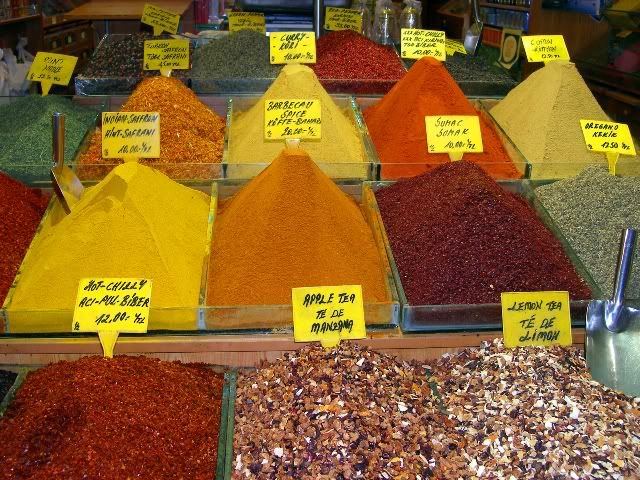
Adding exotic and ethnic seasonings and ingredients to your cooking can turn even the most ‘blah blah’ meal into something to talk about. Adding bold flavors to food is also a way to bring interest and greater enjoyment to meal time. Today there are greater and greater diverse food choices in general to be found on supermarket shelves, and ‘exotic’ has become more and more accessible. So it’s likely that you may have already heard, used or have been thinking of using some of the items from the following list. As Thanksgiving and the Christmas season approaches, it would be great to incorporate some of these ingredients and seasonings into the traditional meal to spice things up a bit.

1. Coriander

2. Whole cloves

3. Whole or ground allspice

4. Curry powder

5. Freshly grated nutmeg

6. Grated coconut and coconut milk

7. Trader Joe's masala simmer sauce (I know, it's a brand, but I just had to put it on the list, its just that good and versatile.) :)

8. Thai red curry sauce and red curry powder

9. Fruit especially pineapple and anything 'citrusy'-canned, pre-cut, and dried fruit works well

10. Jerk seasoning

11. Yogurt for wonderful ethnic sauces and marinades with an added flare

12. Honey

13. Soy sauce

14. Fish sauce

15. Ginger

16. Couscous

17. Hummus

18. Cumin

19. Chipotle peppers

20. Turmeric

When introducing a new ingredient to your cooking or putting a different spin to a more familiar one, slow and steady is the rule. Take a meal you usually prepare and make a subtle change. For example, in the case of beef stew, a simple upgrade could be adding a piece of ginger in the pot. And why not try lamb the next time?

Finding the exotic in a dish is as simple as going to your pantry, that is if it is stocked up with the right ingredients.

Non-Diet Tips   © 2008. Template Recipes by Emporium Digital

TOP