Showing posts with label dieting. Show all posts

23 June 2010

10 Regular Food Habits of The Savvy Non-Dieter™

The Savvy Non-Dieter™ concept is all about redefining the relationship you have with food by transforming the diet mentality which governs so many of our eating experiences. I've found that dieting principles of deprivation, starvation, guilt-driven eating and restrictive meal planning have found their way into our general perception of the way we eat.

So many are using these principles even when not on a diet plan to lose a set amount of pounds. Whether we are aware of it or not, much of our thoughts of food are dictated by a society where there is ongoing and growing food phobia that has been fueled by a dieting culture.

To be a Savvy Non-Dieter™ is to not only question this food culture, but practice regularly a lifestyle which follows a healthier way of eating and cultivates many wonderful food habits. Ten of these are:

1. Often considering Quality and wholesomeness when making food choices.

2. Having no 'cheat' days. All foods are allowed, meaning that there are also less cravings.

3. Enjoying dessert with enthusiasm, appreciation and full engagement.

4. Practicing portion size savviness in a healthy and effective way.

5. Eating without feeling attacked or punished by food.

6. Enjoying ethnic cuisine whenever possible.

7. Having at least one recipe book with lots of colorful pictures on the book shelf (even though you may not cook much). Food is nice to look at!

8. Getting out to eat with family, friends, loved ones without needing to rationalize or justify this indulgence to yourself.

9. Knowing when to take a doggy bag and enjoy the leftovers later.

10. Having a food pantry and fridge with little or no "diet" items. The Savvy Non-Dieter™ (aka you) know that "diet" and other fake, altered foods, which are in the least resemblance to their original wholesome form, are less desirable.

Off course there are many more regular food habits of The Savvy Non-Dieter™, and you can come up with the regular practices most suited to you. The question is how open minded are you willing to be?


To Your Enjoyable and Guilt-Free Food Experiences,

23 February 2010

Eight Non-Diet Tips You Can Apply Right Now

When it comes to weight management, so many people get overwhelmed and stressed. It just seems so complicated. When you put diets into the mix, successful weight management may almost seem impossible. So before you even consider yet another diet, consider rethinking this option. Instead, begin with these simple Non-Diet tips which you can utilize right now to help free you from the dieting roller coaster.


When it comes to weight management:

1. Be in it for the long haul. Do not be discouraged by minor shifts of weight in an undesired direction. Be patient.

2. Be Fiber Conscious. Fiber adds bulk and that’s a good thing, because that fills you up faster and longer. Vegetables, fruits, beans etc.

3. Watch your Liquid Calories especially soda calories and some "energy drinks". These really add up because they are so quickly consumed.

4. Avoid Diets which promise Quick Weight Loss

5. Eat several small meals daily because your body will only metabolize a certain amount of food based on it’s needs and the rest is stored as fat. A smaller meal means that more of the food is likely to be burned out and less stored as fat.

6. Take on a daily relaxation practice. Eg. Meditation, going for a walk, reading a good book, playing with a pet, meeting friends etc. or whatever makes you feel uplifted and less stressed.

7. Set your scale to your desired weight and step on it as minimally as possible after that. Place a note on the scale with your desired weight and make that your motivator. Avoid being a prisoner to it daily.

8. Have a support network. Being amongst like-minded people is one of the fastest ways to achieve a goal.


To Your Enjoyable and Guilt-free Food Experiences,

14 January 2010

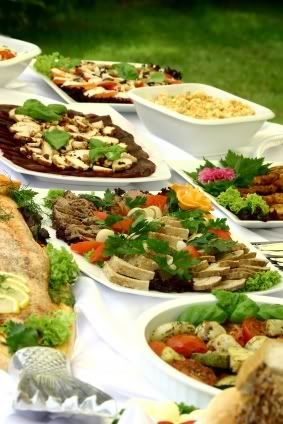
Seven Non-Diet Tips to Apply to Any Buffet Table

A party, restaurant, or cruise buffet can be a wonderful event for some and for others on some kind of weight management plan, quite anxiety producing. However, there are ways to be ensure that a buffet is always a positive experience, with no guilt-ridden side effects.


Seven useful tips to consider:

1. Don’t come to the buffet starved or hungry. If the buffet event is in the evening don’t skip lunch and/or breakfast. Even though you don’t have to wait the whole day for the buffet, eat something light anyway. You don’t want to be full, but ‘saving your calories” may not be a good idea either. If you are too hungry, you may be more likely to loose sight of your intake.

2. Don’t station yourself at the buffet table (ie. sit too close to it for most of the time). If you have the food in front of you for most of the time, then that becomes your “entertainment” and you naturally pick at more stuff than you would otherwise. Especially with the bit-size, finger foods, it’s easy to overdo it as it is likely that you will have no idea how much you’re actually consuming.

3. Walk around and scan the buffet area before you pick up a plate and begin making food choices. This helps you to know before hand what you really would like to have and it also shortens the time you will spend making decisions once you are on the line.

4. Give yourself permission to not have to try everything and to try the things you really want. While on the line, if you are not certain about a food, take a little on your plate and try it right there to make sure it is something you want.That way you avoid later having a full serving of a food on your plate that you may find that you do not even like that much, but still end up more than just tasting simply because it's on your plate already.

5. Get some water in between cocktails, and other drinks to manage liquid calories.

6. You don't have to eat everything on your plate. A buffet, with all of its choices, can make people quite anxious especially when they are on the line and have seconds instead of minutes to make a decision on what to take. You may feel pressured to rush and may put things into your plate that you may not really like, then later feel that you have to eat whatever is on your plate.

7. Be sure to only allow yourself one plate per course or buffet station-appetizer, entree, dessert etc., if you can. A buffet is often separated into many different stations with many different choices and it helps to be mindful when navigating each section. That way you don't overdo it in one section before you get to the other food courses offered.


These tips will help you make the buffet experience one that is exciting and less overwhelming as far as making choices that leave you satisfied and free of guilt. Since a buffet is an ideal opportunity to try a variety of foods all in one place, the number one thing is to savor and enjoy the food fully in order make it a good eating occasion for you.


To Your Enjoyable and Guilt-free Food Experiences,


30 December 2009

What the Weight Watchers Hungry Monster Does Not Teach Us About Hunger and Cravings

This is the time of year when people begin holding the intention of a New Year’s Resolution to lose weight or get more fit. At this point it has become a tradition, one which half of the world is initially fired up at the beginning of the year to fulfill. Weight Watchers, like most other weight loss programs, is now happily feeding this enthusiasm with an all out inundation of commercials, some of which depict the infamous “Hungry Monster”. This is a fuzzy, orange, big-eyed character who is suppose to represent the pesky rambling in our tummy called hunger which causes us to eat cookies, ice cream and similar foods, totally sabotaging our weight loss goals.

Upon conducting a quick online research of Mr. Hungry Monster, I found him to be quite popular. The first three pages of Google were filled only with raves and praises for this unique puppet. Most people were asking questions of where they could purchase him. One blog post referred to Hungry Monster as representing a "beast inside of them that was controlling what they eat” and that they need to retrain it so that they can eat healthier. The bottom line is that people love this orange, fur ball monster, and most seem to want to take him home as well.

So any criticism of the Hungry Monster concept would seem quite out of place, and could probably be grounds for an all out barrage of insults. But here goes. Although Hungry Monster is marketed as a playful symbol of hunger, he is portrayed as a mischievous and trouble making character which we certainly need to tame. Therefore hunger is something we need to tame. What is sad is that people actually do believe that something as natural as hunger, real physical hunger, is a bad thing.

The body has devised hunger to indicate to us when it is in a real physiological need for food. However when we make hunger the enemy, what we are really doing is confusing hunger with cravings. Cravings most often have nothing to do with physical hunger and are always focused on a specific food. Two types of cravings are emotional cravings and physical cravings.

Emotional cravings or “psychological hunger” occurs when food is used to escape from an undesired feeling, to deal with stress or provide comfort and ‘good feelings”. Physical cravings are often associated with some sort of deficiency the body is experiencing as often happens with structured diets where there is the tendency to exempt many foods. This lack of balanced eating can lead to low blood sugar (hypoglycemia) and deficiencies in essential vitamins and minerals. The body may crave foods containing the missing carbs and nutrients it is short of.

Dieting is often a major cause of food cravings. When you can’t eat a food, you will want it more. The moment you get the chance "to cheat" and taste that forbidden fruit, you are likely to overdo it, because you know that it may be a long time before you can have that food again.

Other potential sources of food cravings include:

1. Low serotonin levels which may cause cravings for carbohydrates (mostly high sugar choices). Carbohydrates help ensure the body has sufficient tryptophan to allow the brain to produce desirable serotonin levels. Serotonin is a hormone essential for relaxation and sleep.

2. Environmental cues: A fast food commercial on TV or passing near the actual building like McDonald's, Wendy’s etc. could create a craving for fast food items. Certain activities strongly associated with a specific food can trigger a craving for that food, eg. traditional holiday foods during the Christmas season, candy or popcorn and other snack foods while watching television at home.

So if you intend on embarking on a weight management plan for the New Year, a good initial move would be to better understand hunger and cravings, so you can identify them easily when they occur. Ignoring true hunger, as the Weight Watcher’s “Hungry Monster” campaign would suggest, is not necessarily the angle to take.

It is important to take in enough calories and nutrition. It is equally wise to not skip meals or to exempt as many foods as possible as part of a restrictive eating plan, since these practices can cause unnecessary cravings which are the real source of overeating.


To Your Enjoyable and Guilt-free Food Experiences,


P.S: To assist you in managing food cravings you might want to take a look at Am I Hungry, a comprehensive, non-diet alternative program consisting of books, workshops, coaching etc.

20 December 2009

Overcoming Emotional Eating-Your Main Weight Management Strategy

Diets inevitably lead to weight regain. This is a truth that can be explained not only by physiological factors (ie slowed metabolism), but by the fact that conventional diets do not address the underlying issues behind unwanted weight gain. One of these issues which many who find themselves constantly on diets face is emotional eating. Emotional eating is fueled by psychological hunger over physical hunger.

That is emotional eating is normally brought on by such things as emotional cues,stress, social situations, specific settings, smells, etc. These have nothing to do with a roaring stomach which is signally that you body is ready for food, which constitutes our inate ability to regulate our eating internally without any need for a diet plan. Emotional eating however causes us to no longer be attuned to these signals.

There are two instances of excessive consumption which can arise from emotional factors. The first is when we literally ignore hunger cues, not eating when we really should be or hardly eating enough (aka starvation or deprivation) and then later binging when we are overwhelmed with an insatiable yearning for food. Emotions of guilt and shame from binging will likely cause another such episode in the near future.

The second instance of emotional eating occurs when food is mainly used as a pacifier to make us feel better or allow us to think less about a problem or troubling issue. The ability to sense fullness suffers greatly as no attention is paid to when we've had enough. In both situations it is easy to get lost in eating for as long as we need the food to cope with the emotions.

To begin combating this cycle of emotional eating it is important to do several things:

1. Acknowledge and become aware if you are using food as a pacifier. True freedom begins with awareness. The hold emotional eating can have on you exists through mindless eating; it is almost as if you are in trance. To break the trance you will need to snap yourself out of it by becoming alert and totally conscious.

2. Find non-food related activities to deal with stress and negative emotions. Food is wonderful and should be enjoyed, but there are so many more enjoyable things in life as well. Many other things can relieve stress in the moment it comes about, meaning that you don’t have to leave your house or go through a long preparation to access non-food related pacifiers.

Examples of instant relievers are
• playing with a pet,
• turning the TV to a funny sitcom or uplifting program,
• playing your favorite CD
• or turning on you favorite radio station,
• playing a board game
• connecting with someone online through a social network, IM etc
• doing something else with your hands –whether it involves taking up something to read or observe, completing a task around the house or an errand, engaging in a hobby or opening the door to take a walk down the block if you feel able to.
• Have a cup of herbal tea. Yogi tea is one of the best brands, offering many flavors. And what is also great about the brand is that each box comes with an exercise to help you relax and refocus.

3. Slow down your life a bit. The more we rush, the less time we seem to have and the more exhausted we may feel. If you are an emotional eater, you may not realize it, but food has probably just become another chore on the "to do list" of your multi-tasked life. You may eat while on the phone, while driving to work, while shopping, while doing paperwork at work or at home etc.

Taking a pause during your hectic day and at meal time can go a long way to helping you become more aware.

4. Don’t skip physical activity. Exercise need not feel like a chore. There is such a thing as easy and effortless exercise when it is an element of everyday physical activity. Not only does daily physical engagement keep you fit, it also gives you something else to put your focus on besides food and it relieves stress.


To Your Enjoyable and Guilt-free Food Experiences,


Next time I will providing a short list of resources which can help you to identify and combat emotional eating.

17 December 2009

What is Your Approach to Permanent Weight Loss?


We've already discussed at length some key principles of the having a Non-diet mindset. However here's a quick and fun way to get a general assessment of your approach to eating and weight management. It only takes a couple minutes and is quite revealing. You need not put in your name, just simply begin with the "start quiz" button.


Hope this assessment tool gave you some greater insight.


To Your Enjoyable and Guilt-free Food Experiences,

10 December 2009

Non-Diet Weight Loss with Effortless Physical Activity

In the previous article we spoke of differentiating between physical activity as a product of everyday natural activities vs. exercise which is much more regimented and planned. Now the question is how does that translate into your real everyday life? How can you make exercise effortless so that it fits into your lifestyle? Well here are a few suggestions to begin. Pick the ones most applicable to you.

• Have regular at-home dance parties. Put on the radio and according to the words of Lady Gaga "Just Dance". Involve the whole family or who ever you live with, or do it yourself. Dance as much as possible. Rhythm is not required. Dance while you are washing the dishes, if you are in front the bedroom mirror, etc. Use this most natural form of movement to your advantage. You could even try the new Just Dance game from Nintendo Wii if you need something more interactive.

• Take up a specific dance like salsa, belly dance, hip hop or any aerobic dance. The thing I like about dance is that it brings the element of good feelings and connection into the physical activity, and you are less likely to feel stressed by something which you have an emotional bond with. So other activities which can work include yoga, karate or kickboxing, tai chi, and alternative dances like the “journey dance”

• Pick up a sports activity or if you’re not so inclined, buy a Wii Activity system which simulates many fun activities including hula hooping, without requiring you to leave your home.

• Get a trampoline in the back yard or a mini-one in the bedroom and get on it as often as possible.

• Enjoy an outdoor swing (make sure it can accommodate you)

• Get a ping pong table or a “ice hockey” table in the game room, family room or in an extra room if you can.

• Roller blade in the backyard, in the park or at the skating ring.

• Go swimming-Water activities make for a wonderful fitness alternative

• Take a trip to a water park

• Walk in the neighborhood

• You’ve heard this one before, but take the stairs instead of the elevator or escalator. It really is fulfilling.

• If you’ve been thinking about it, adopt a dog. In some places, you can even foster a dog, so that you don't get into an unwanted long-term commitment if you are not ready.

I say a dog, because dogs are very high energy pets who force us to engage physically. We either play with them in the backyard or need to take them out on a walk. Either way both sides are enjoying physical activity.

• Take on a hobby. Although it would be good to adapt a hobby which allows for some physical exertion, it is absolutely not necessary. It could be anything from pottery making to painting. You're more concerned with the mental focus and stress reduction which hobbies often provide. This helps reduce stress-induced emotional eating and unwanted weight gain. If you are looking to lose weight, you won’t need to exercise as much. Also, a hobby is a wonderful way to combat emotional eating.

Often times, the activities we consider to be “child’s play” like the hula hooping and riding on a swing, roller blading and the trampoline, are often the most physically rewarding. Just think about it. Children who play often enjoy natural physically fitness. A sense of playfulness can go a long way towards us being able to naturally fit physical activity into our daily lives, aiding in our non-diet weight loss efforts as well as long-term weight management.

Free your physical health and weight management from restriction and strict, regimented control. Making physical activity more about what you already do than what you need to plan for, causes it be a more fun and sustained part of you life.


To Your Enjoyable and Guilt-free Food Experiences,

11 November 2009

Getting Enough Calories and Nutrition

Sufficient daily calorie intake is crucial whether you are on a diet or not. Dieting and skipping meals mean restrictive calorie intake which can ultimately decrease the body’s metabolic rate (the rate at which energy is used by the body). As you give the body less calories to work with it responds by trying to conserve energy to make sure that it is able to support its daily tasks. But the result of all of this is usually fatigue and lethargy. Furthermore, if one were to increase calories significantly, it is likely that they would gain weight because those calories would be burned at a much slower rate. This is why once someone has stopped dieting and begins eating normally they may regain the weight.

The bottom line is that the body needs ample energy and the ability to function at its best. It is able to do this by utilizing Carbohydrates, Protein, Fats and many minerals and vitamins. Carbohydrates' role is primarily to provide a direct source of energy and fuel. Fat also provides energy although the process of extracting energy from fat is more complicated.

There is an interchange of mostly carbs and some fat for energy as needed, but it is ideal to have enough carbs in the diet so that the body isn’t forced to resort to both Fat and Protein in the absence of sufficient Carbohydrates. Protein has many other major functions (e.g. for tissue building and repair) and when the body is forced to use it for energy then this usually means that the body is greatly deprived and starved. So be wary of extreme carb. restriction.

Carbohydrates, Protein and Fats are all essential and need to be consumed in proportion to each other to make sure that they are being utilized in the most efficient way in the body. Although there are variants to the proportions, daily requirements are generally 55% Carbohydrates, 15% Protein, and 30% Fat of total calories consumed for the day. They are each used by the body in very specific ways to complete tasks and maintain an optimal state of health.

A simple way to ensure that you are getting enough energy and nutrition is to consume nutrient-dense foods. This means less processed foods,and foods which have been minimally altered. This would also ensure that you are consuming enough vitamins and minerals which are also needed for generating energy and serving the many other functions of the body. For e.g. at breakfast time, a nutrient dense food like whole grain hot or cold cereal with nuts or whole grain bread with nut butter would provide high quality Carbohydrate, Protein as well as Fat calories, and essential vitamins and minerals.


To Your Enjoyable and Guilt-Free Food Experiences,

05 November 2009

Can You Overdo Healthy Eating?

I know you must be asking, How can anyone overdo healthy eating, isn’t healthy to any degree a good thing? Well sometimes you can overdo a good thing. Once the “bad”, unhealthy food has been identified the objective becomes elimination, elimination, elimination.

One common area of overdoing health is with fats and low carbohydrates. In the case of fats and carbohydrates, which are often categorized in the “bad” food category, one would think that these weren’t nutrients required in the diet. Things can quickly get out of hand, to the point where elimination of these targeted foods becomes the dominant energy a person experiences around eating.


Extreme avoidance of anything that is labeled as “bad” can create anxiety.

-Generally any negative emotions attributed to food whether it is around excessive, emotional eating or avoidance eating leads to guilt and unease.

-Overdoing healthy can also lead to a very unilateral view of foods. For example a food item as a whole is only judged by its absence of the “culprit” ingredient or component. That’s why it can become so easy to overdo foods labeled as “fat-free” for example.

In the case of "fat-free foods, often times, the rest of the nutritional profile of the food, aside from the fat content, is almost overlooked. It is most helpful that the overall nutritional value of a food be considered when your focus is on health. A soda is fat free, but most wouldn’t generally consider it beneficial nutritionally. A cookie might be “fat-free”, but be loaded with fake ingredients.

So it’s important to broaden and open your mind, so that you don’t miss out on nutritionally valuable foods just because they're not fat-free or carbohydrate free, etc. Yes it’s fine to include these in the diet as well, but not exclusively so. And it also must be remembered that these nutrients are needed in certain quantities in the diet to promote good health, energy for the body, and proper functioning of all the organs of the body.

Healthy eating should be more about "What You Can Eat" rather than "What You Cannot Eat”. Food should never create anxiety whether it be about excessive eating or the extreme elimination of foods considered as unhealthy or inclusion only of foods considered healthy. Unless someone truly has a food allergy, there should be some balance, because healthy eating is as much about having wonderful, enjoyable, stress-free eating experiences as it is about the food itself.


To Your Enjoyable and Guilt-Free Food Experiences,


NOTE: Next time I will be discussing getting adequate calories in the diet for optimal health and energy whether you are looking to loose weight or not. Also, remember to sign up for the 10-Part E-course on How Non-Diet Weight Management Can Work for You to gain more insight on making eating guilt free and enjoyable.

10 October 2009

A Diet For Life?

Like most other people, I am always faced with someone around me looking for the ultimate answer to weight management. Often the answer which most people expect is in some form of diet recommendation or extreme calorie restricted meal plan. For many Nutritionists it’s therefore easy to succumb to the Diet Doctor role, because that’s what people expect and it's where the demand and cash is.

Diets are often geared towards short term weight goals. So they have their purpose. However, in the case where someone gets wonderful results from a diet, there is often that awkward post-diet period where the weight has been lost, but the person doesn’t know how to or is not willing to let go of the diet.Even if there has been no desirable results, the tendency is to get on another diet.

Although, it can be hard to break free of the routine of such structured eating, one has to ask themselves the question “Can I or do I want to be on a Diet for Life or for any extended period of time?” Especially when undergone for extended periods of time I've seen dieting easily lead to Anemia and reduced nourishment in some form or the other. It makes sense with such aggressive elimination and restriction of individual or entire groups of foods, and not to mention the 'laxative' diet teas and questionable 'magic bullet' concoctions. Although diet bars, shakes etc have evolved somewhat they are no substitute for real food.

The Savvy Non-Dieter advocates things like regular meal intake without skipping meals or starving oneself, incorporating the most healthy forms of carbs, protein, fats in the diet, eating mindfully with attention and purpose, portion size awareness, increasing appreciation and understanding of the food we eat (quality and wholesomeness, freshness, sustainability, organic certification status etc.), among other things.

It pays to be a Savvy Non-Dieter, not simply as a type of defiance against all things diet. It’s about being empowered to more often bring quality of life and quality food encounters to the forefront of our eating experiences. It pays to be a Savvy Non-Dieter in a Food Phobic World.

09 June 2009

15 Fun Activities of a Savvy Non-Dieter


Being a Savvy Non-Dieter isn’t about a blind love of food. It’s love of food coming from a place of appreciation and awareness, genuinely caring about where your food comes from, and having an enjoyable, guiltless relationship with what you eat.

Additional, it is important to understand that adapting a Non-Dieter Mindset and being a Savvy Non-Dieter is not an issue of defiance, but empowerment and freedom. It's all about everyday practices which define a positive and healthy connection with food in your life.

Do you recognize any of the following practices in your encounters with food? Or perhaps you have some you might like to add.

1. Dining Out

2. Picnic Anyone?

3. Enjoyment of Food Festivals/Shows when possible

4. A Food Magazine Subscription

5. A Well Stocked Pantry

6. Regular visits to the natural/organic food store of the organic section of the supermarket.

7. Regular pampering, relaxation, massages, and other forms of self-indulgence

8. Enjoyable lunch breaks outside the office at a nearby eatery, restaurant, park of public space.

9. A nice collection of cook books or recipe favorites

10. Beautiful and functional plate ware, flatware.

11. Ongoingly striving towards personal growth and advancements in life so that food is not compensating for anything lacking in other areas of your life .

12. Regular weekly viewing of the Food Network…OK, that one is optional.

13. A Diner table with enough space to share a meal with at least 4 people.

14. Allowing the simple indulgence of a sensibly portioned dessert, when appropriate, without guilt. Many restaurants and food manufacturers alike are providing ‘single serving’ dessert choices, and not only are these choices more appropriately sized, but they contain more wholesome ingredients.

15. Always trying new and different food items from the supermarket or food market to add to your pantry.

There are so much more that can involve being a Savvy Non-Dieter. You may have to decide for yourself. I don't believe in "boxed up" concepts or personal labels, so you as a Savvy Non-Dieter is whatever works best for you as long as it leads you to healthful, enjoyable eating experiences.

07 September 2008

11 Qualities Towards Building A Non-Dieter Mindset


The word ‘non-dieter’ is self explanatory; it conveys a diet-free lifestyle. But I think it is important to approach this in a totally positive way without engaging in a full fledged ‘witch hunt’ on all that it is diet.

That’s why I use the term ‘non-dieter mindset’, because it’s not simply about not dieting, but about developing a philosophy that would allow you to focus on ways to enjoy food and still keep healthy. Giving yourself permission to step away from the fear and guilt around food, which diets thrive on, involves qualities which become part of your every day life.


So what are some of those qualities of the non-dieter mindset? Well they include:

1. First, being unconventional and setting your own rules. Dieting is the norm, and to step away from it means stepping into a new interpretation of what your relationship and attitude towards food and weight management will be.

2. Loving food and enjoying the experience of eating, but not needing food to feel good.

3. Eating in tune with your body’s hunger signals, so that you don’t deprive yourself or over regulate your eating.

4. Having a healthy enthusiasm for all aspects of a meal, from the ingredients that go into it, to the preparation of it, to off course, consumption. You don't have to be a 'rock-the-house kitchen pro', but appreciating how a meal got to your plate, and the meal itself, goes a long way in receiving that meal more positively.

5. Avoiding hurried eating

6. Avoiding skipping meals

7. Avoiding what I call ‘food impersonators’-Highly processed foods stripped down to a fraction of their original, natural self with the addition or compensation of artificial ingredients, or the subtraction of healthy ones.

8. Refraining from negative food labeling-'good' vs. 'bad' foods

9. Finding a balance between everyday eating and indulgence, and realizing that indulgence is not a dietary offense.

10. Being open minded

11. Having one or more positive and joyous hobbies and activities you take part in regularly. That way, you can enjoy food, but not depend on it for enjoyment, because it won't be your main source of pleasure.

These are only some qualities I think can help build a non-dieter mindset. You might have others not included here, but remember that building a non-dieter mindset starts with adapting behaviors that become healthy everyday practices. When those practices become front and center, then there is no need to run away from any diet, because the idea of dieting ceases to be an option.

24 July 2008

Is Realism in Goal Setting Necessary for Success in Weight Management?


Is realism in goal setting important or even necessary? I can’t count the number of times I’ve had well meaning people tell me to "Be Realistic”, and I can’t say how debilitating I feel those two words to be. In a sense, realism produces not only identification with, but also conformity to what is accepted and represented by society or our friends and family; and making that reality our own. It’s a think-inside-the-box concept which makes it difficult to set goals based on personal needs, desires, tastes, lifestyle etc., and can lead to choices which may not be a great fit for us.

I’m really more interested in what is believable for me, and when someone tells me to be realistic, especially about goals, I believe what they are really telling me is to do everything like everybody else. But you can’t set goals largely based on the outcomes of other people’s lives. While you can learn from what others have done, to me goals have to be set according to a person’s own standards and life situation.

For example, many have chosen Zero-Calorie/artificial sweetened beverages as a means of decreasing overall calories in the diet. But for me personally, if I were to set weight management goals and a plan for example, such beverages wouldn’t be a component, because I generally dislike artificial sweeteners.

Yes, they are accepted, act as a sugar alternative and calorie buster and some would say is a ‘realistic’ choice; but it’s not real for me. While realism would incline me to go with the masses, and incorporate such sweeteners in my weight management goal setting, my personal preferences would oblige me to step outside of the box. The focus could possibly be more on using and seeking products with alternative natural sweeteners like honey, agave, raw sugar, molasses etc., and finding natural substitutes for regular granulated sugar.

There is some necessity to be true to yourself when setting weight management or any other type of goals, and to set goals which are most relevant to you. When realism becomes a significant requirement in goal setting however, I believe that we become vulnerable to circumstance. To me that’s what happens with dieting, which still continues to be a multi-million dollar industry, despite the fact that so many don't succeed at it. A person stands to be a victim to this circumstance, but going on a diet to loose weight is still popular as it's considered the ‘realistic’ thing to do.

The greatest things which have been done, all of the conveniences we experience today like the phone or air travel, weren’t achieved by realistic people. In fact these were perhaps the most idealistic and original people out there. They prove that change and success needs some stepping away from cookie-cutter, one-size-fits-all ‘realism’, being true to ourselves, and getting into forming our own personalized goals.

09 June 2008

You Don't Need Weight Watchers To Point It Out..Diets Just Don't Work

Are diets meant to really work in the first place? A diet is a regulated eating plan, but diets are becoming more and more restrictive and unrealistic. Think of the premise. Someone who has most likely never met you or know the lifestyle that you lead, is dictating to you a ‘cookie cutter’ magic weight-loss formula. If you’re the regular dieter, then you've probably purchased oodles of books and guides and programs developed by this or that nutrition or fitness guru. You believed what they say, because afterall, they’re the expert, right. Try as you may, if the diet plan they’re offering does not fit into your lifestyle or requires a dramatic overhaul of your everyday life that you are either unable or not ready to take on, then you are not going to stick to it.

I love food. I got involved in nutrition because of it. Eating well is a measure of a great life. Starvation, not so much. Perhaps I can understand the five-day fast for the sake of fitting into the dress. After all it is Wedding and Prom season. But a diet is not the end-all, magic solution. Talk about putting all your eggs in one basket. Diets are never meant to be long-term, but in most cases achieving and maintaining desired weight is. Most diets get the boot before they pay off in pounds lost what they cost in dollars. I wonder why...

Well for one thing people are not very good at doing non-fun things for too long.

So what's the alternative?” What else could possible rival the bootcamp quality discipline of a diet? If not a diet, then what?

Well I can tell you that the 'answer' is not another 'cookie cutter' formula. If only weight management could fit in a petridish and become a nice and predictable chemical outcome. But I don't know about you, but I'm a little more complicated than that.

There's the world of dieting and there's the non-dieter mindset. It's not about trying to run away from diets, because my guess is they're not going anywhere. There's lots of things out there which have nothing to do with dieting; realistic and more pleasant eating experiences, and all the other things that lessen our preoccupation with avoiding food. Imagine food be to be fun without commanding our daily lives.

There's stuff outside of dieting, and those things need attention too. Things that make you feel good and not guilty, and healthy overall. Some of them have nothing to do with food. So this blog is not about diet bashing, it's more about finding all the things food related and otherwise which build a non-dieter mindset.

Non-Diet Tips   © 2008. Template Recipes by Emporium Digital

TOP